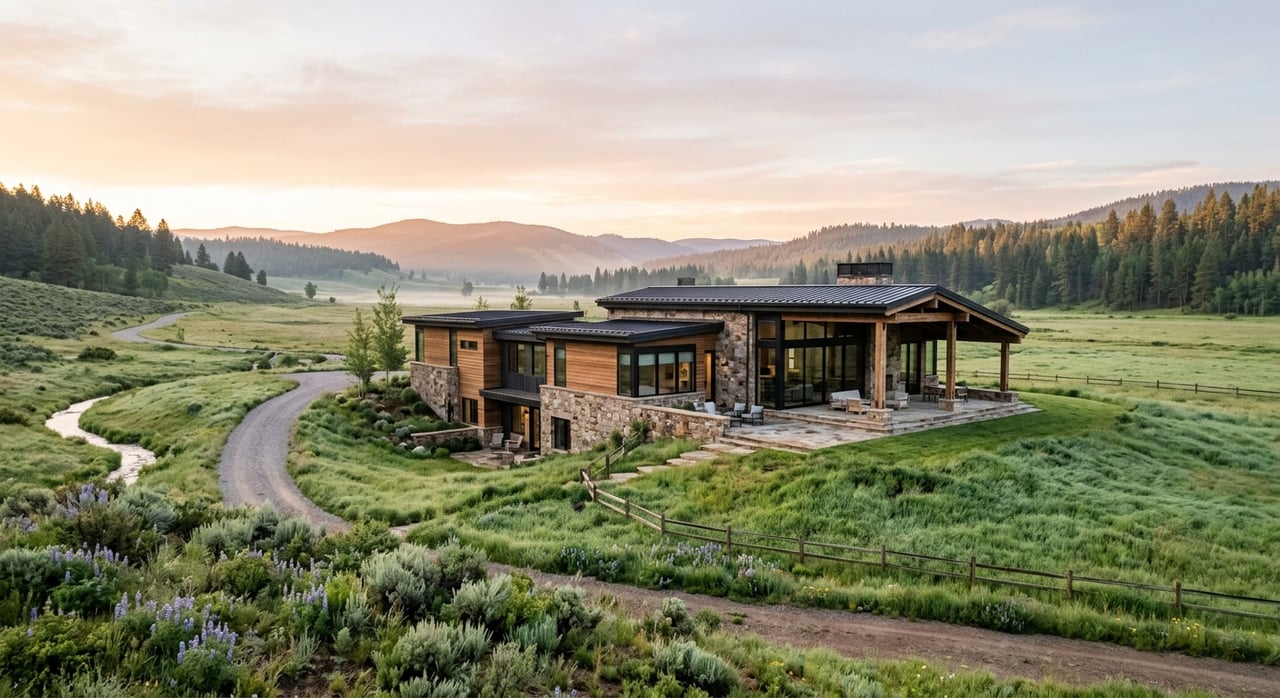
Buying land in Driggs can feel simple at first. You see a beautiful parcel, imagine the mountain views from your future home, and start doing the math. But in Teton Valley, the real story is often hidden in zoning rules, overlays, access, and utilities. If you want to buy with confidence, you need to know what shapes a lot’s true build potential before you write an offer. Let’s dive in.
Start With the Right Jurisdiction
One of the first questions to answer is who governs the parcel. In the Driggs area, land may sit inside Driggs city limits, in the Area of City Impact, or in unincorporated Teton County. That matters because each area can have different zoning rules, review standards, and approval processes.
Driggs says the Area of City Impact, often called the AOCI, has its own zoning code, subdivision and development standards, and application process. The updated AOCI ordinance took effect on December 18, 2024. If you are comparing two lots that look similar on paper, this one detail can change what is allowed and how long approvals may take.
Inside city limits, the Driggs Land Development Code controls key items like setbacks, height, allowed uses, design review, site development, and subdivision approvals. The city also advises buyers to use the Teton County GIS zoning map along with recorded plats and surveys when evaluating a parcel. Teton County notes that online GIS copies are not the official originals, so screenshots alone are not enough for due diligence.
If the property is outside city limits in unincorporated Teton County, zoning districts can vary widely. Common districts around Driggs include AOI-2.5, AOI-20, IR, RN-5, FH-10, FH-20, RR-20, RA-35, and LA-35. County code shows average density ranging from 1 unit per 2.5 acres in AOI-2.5 to 1 unit per 35 acres in RA-35 and LA-35.
Why Zoning Density Matters
Density affects more than the number of homes that may be allowed. It also shapes the kind of ownership experience you can expect, from closer-in lots with utility access to larger parcels that may come with more infrastructure work and more land-use constraints.
For example, RN-5 allows an average density of 1 unit per 5 acres, while RR-20 allows 1 unit per 20 acres. If your goal is a custom home with room to spread out, that may sound attractive. Still, lower density land can come with more complexity around access, septic, wells, and usable building area.
Thinking About Annexation
Some buyers hope a parcel outside city limits might later be annexed into Driggs. The city says annexation is available only for property that is contiguous to city limits and within the AOCI. That means not every parcel near town has a path to annexation, even if it feels close to Driggs in day-to-day terms.
Look Beyond the View
A big view can sell a lot quickly, but a view does not guarantee an easy build. In mountain markets like Driggs, what looks open and ideal can still be limited by overlays, easements, drainage patterns, or access challenges.
Several Teton County zoning districts are specifically intended to protect the qualities that attract land buyers in the first place. FH-10 and FH-20 are meant to preserve scenic views, native vegetation, wildlife habitat, and public access while discouraging scattered hillside development. LA-35 is intended to protect floodplains, water quality, and critical habitat.
That means a parcel’s appeal and a parcel’s development path are often tied together. The more sensitive the setting, the more carefully you need to evaluate where and how a home can actually be placed.
Check Every Overlay
Teton County’s Natural Resource Overlay can trigger added reports or studies. In riparian, wetland, or fish and wildlife areas, development is intended to cluster in a way that creates meaningful open space. The county also maintains floodplain and wildfire hazard overlays.
Within Driggs, special districts can include floodplain, design review, airport, and planned unit development layers. These do not automatically stop a project, but they can change design, placement, permitting, and timeline expectations.
Access Can Make or Break a Lot
Access is one of the most important items to verify early. Teton County’s short-plat and land-division rules require approved access from an existing public road or approved easement. If access is unclear, the lot may be much harder to use than it appears in marketing materials.
Driggs also warns that utility easements and recorded plats or surveys can limit where a home can be built. If a parcel intersects or affects the canal, Grand Teton Canal Company approval is required. This is why a strong land purchase process looks at the whole site, not just acreage and views.
Utilities Shape the Real Cost
In Driggs, utility planning often decides whether a lot feels straightforward or expensive. A parcel with a lower purchase price can still cost more overall if water, sewer, septic, or well work becomes complicated.
Driggs provides water and sewer service, but new residences and commercial buildings within city limits, or within 300 feet of an existing sewer line, must connect to the city system. If a new structure is not within 300 feet of an existing line, the city says a building permit will not be issued until the owner either negotiates a line extension or obtains a septic permit from District 7 Health Department. Outside city limits, usage and connection rates are 1.5 times the city rate.
If the Parcel Needs Septic
When a lot will rely on septic, site suitability matters before you purchase. Eastern Idaho Public Health reviews land development proposals to confirm that waste disposal is suitable. The Idaho Department of Environmental Quality says public health districts permit and inspect septic systems, perform site evaluations, and require buyers to check site suitability before purchase.
In practical terms, that means you do not want to assume a septic solution will be easy just because nearby properties have systems. Conditions can vary from parcel to parcel, and that can affect cost, design, and even whether the site works for your plans.
If the Parcel Needs a Well
If the property will need a private well, the Idaho Department of Water Resources says a drilling permit is required before drilling. Wells also must be built by an IDWR-licensed driller.
For buyers comparing raw land with a ready-to-build lot, that difference is significant. Utility certainty can have a major impact on timeline, upfront cost, and how quickly you can move from purchase to construction.
Development Parcels Need More Planning
For subdivision or development parcels, Driggs requires a water source capacity mitigation plan with preliminary plat or site development applications. This is especially important for investors and custom-home buyers looking at land with a more ambitious long-term plan.
A lot may look like a future opportunity on paper, but water planning requirements can shape what is realistic. This is where experienced guidance and early conversations with the right professionals matter.
Building Rules Matter Before You Buy
Land shopping and home planning go together in Driggs. If you wait until after closing to learn the building standards, you may discover that the lot requires a more expensive design or construction approach than expected.
Inside the city, Driggs says building permits are required for most construction. Site plans must be digitally drawn to scale by a professional. The city also points builders to code chapters covering setbacks, height, architectural design, access and parking, landscaping, outdoor lighting, floodplain, airport, and design review.
Design Review Can Affect Your Timeline
If a parcel is in the Design Review Overlay, Appendix A standards apply. The Design Review Advisory Committee reviews the application before the Planning and Zoning Commission acts.
Driggs also enforces an outdoor lighting ordinance. For buyers planning a custom home, that means dark-sky-compliant lighting should be part of the early design conversation, not an afterthought near the end of construction.
Mountain Building Standards Add Cost
Driggs’ building criteria include an 85 psf ground snow load, 36-inch frost depth, 90 mph wind pressure, climate zone 6B, and seismic zone D1. Those standards matter because site work and structural needs can add up quickly.
A lower-priced lot may not stay low-priced once you factor in grading, foundations, snow loads, and utility trenching. This is one reason local builder input is so valuable before you commit.
Builder Due Diligence Counts Too
Idaho’s contractor rules are another part of smart land buying. The Idaho Division of Occupational and Professional Licenses says most contractors must register for construction work over $2,000 unless exempt. Electrical and plumbing work can also require separate state permits even when a city building permit has been issued.
For you as a buyer, that means builder experience with local approvals matters just as much as the initial bid. A strong builder or designer can help you understand whether the lot supports your vision in a practical, budget-aware way.
Approval Timing May Affect Closing Strategy
For entitlement-heavy lots, timing can become part of the purchase decision. Driggs says applications that require a Neighborhood Meeting need at least three weeks’ notice and will not be placed on the public hearing schedule until that meeting is complete.
If you are buying land for a near-term project, that kind of timing detail matters. It can influence financing, closing structure, and your broader building timeline.
A Smart Parcel Tour Checklist
Before you move forward on land in Driggs, it helps to review the parcel the way a site planner would.
- Confirm whether the property is in city limits, the AOCI, or unincorporated Teton County
- Verify the zoning district and every overlay affecting the parcel
- Ask for the recorded plat, survey, and utility easement information, not just GIS images
- Review the utility path, including city water and sewer, line extension needs, septic, and private well requirements
- Check for canal, floodplain, wetland, wildfire, airport, or design review constraints before writing an offer
- Ask a builder or designer to price the site with local snow, frost, and permit requirements in mind
The Bottom Line on Driggs Land
In Driggs, land value is about more than acreage or mountain views. The real question is how the parcel’s jurisdiction, zoning, access, utilities, overlays, and building rules work together. A beautiful lot can still be a poor fit if those pieces do not support your goals.
When you approach land buying with a clear process, you give yourself a better chance of making a smart long-term decision. If you want guidance that pairs local market knowledge with practical insight into land, new construction, and high-consideration purchases, connect with Mel Bernstein - Grand Teton Team.
FAQs
What should I check first when buying land in Driggs?
- Start by confirming whether the parcel is inside Driggs city limits, in the Area of City Impact, or in unincorporated Teton County, because that determines which rules and approval process apply.
What zoning issues matter for Driggs land buyers?
- You should verify the parcel’s zoning district, average density, and any overlays that may affect building area, design, access, or environmental review.
What utility questions should I ask about a Driggs lot?
- Ask whether the property must connect to city water and sewer, whether a line extension may be needed, and whether septic or a private well will be required.
Can a mountain-view lot in Driggs still be hard to build on?
- Yes. Views do not guarantee an easy build, because overlays, easements, drainage, access, floodplain issues, and other site constraints can reduce usable building space.
Does design review affect custom home plans in Driggs?
- Yes. If the parcel is in the Design Review Overlay, additional standards and review steps apply, and outdoor lighting rules should be addressed early in the design process.
Why is builder input important before buying land in Driggs?
- A local builder or designer can help you estimate real site costs tied to grading, foundations, snow loads, frost depth, trenching, and permit requirements before you commit to the lot.